textile knowledge
Inside Kabakoo’s Textile Lab: from workshop trust to documented craft knowledge
Kabakoo’s first Textile Lab cycle combined a relationship built over almost three years with workshop immersion and step-by-step documentation of weaving and plant-based dyeing.
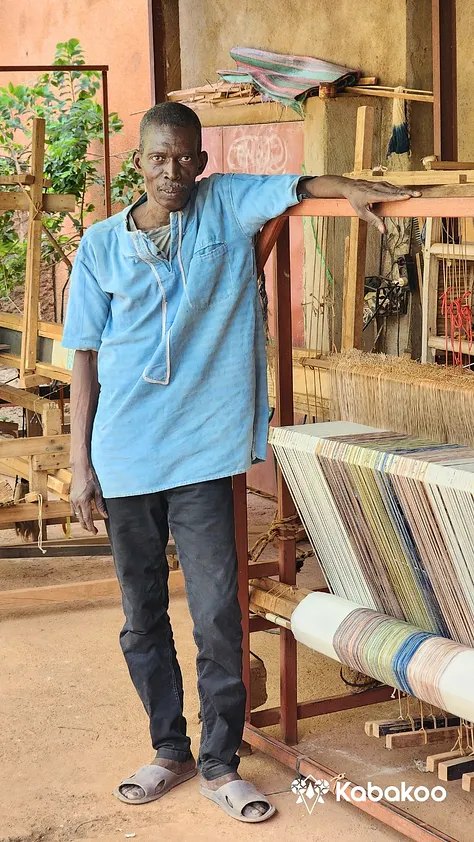
1. Build trust before entering the workshop
Almost three years passed between master weaver Ousmane Diallo’s Highdigenous Talk and his welcoming Kabakoo’s Textile Lab Maker into his workshop. During that time, Kabakoo built and nurtured the trust needed for the collaboration. That relationship preceded the workshop immersion at the heart of the Textile Lab’s first learning cycle.
The wider challenge is concrete: artisans in the textile value chain struggle both to attract younger generations and to reach markets beyond tourism and cultural demonstrations.
2. Begin with weeks of workshop immersion
The first cycle involved several weeks in Diallo’s workshop. A master weaver and one of the last natural-dye experts in Mali, Diallo brought expertise in both weaving and natural dyeing to this immersion.
Kabakoo created the Textile Lab as a research, experimentation, and co-creation platform. Its purpose is to understand how knowledge systems across West Africa’s textile value chains can inspire new forms of upskilling and generate economic opportunities. The workshop immersion formed the basis of its first learning cycle.
3. Look closely at experimentation already happening
Diallo’s practice includes constant experimentation with weaving techniques, the development of new motifs, and the refinement of natural dyeing processes that few artisans still master. His workshop practice encompasses both textile techniques and technological adaptation.
He also adapts technologies such as the Flying8 loom to raise his productivity. Weaving, motif development, dyeing, and loom adaptation all feature in the work of the same master craftsperson.
4. Document the process and present the learning
Moussa, Kabakoo’s Textile Lab Maker, documented, photographed, and recorded every step of the textile process, from weaving to plant-based dyeing. The documentation covered the sequence of making, not only the finished textile.
After the weeks of immersion, Kabakoo held a public session to present this first learning cycle. The July 2026 Kabakoo update describes the collaboration: a relationship developed over time, close observation of a master’s working practice, and documentation spanning weaving and plant-based dyeing.